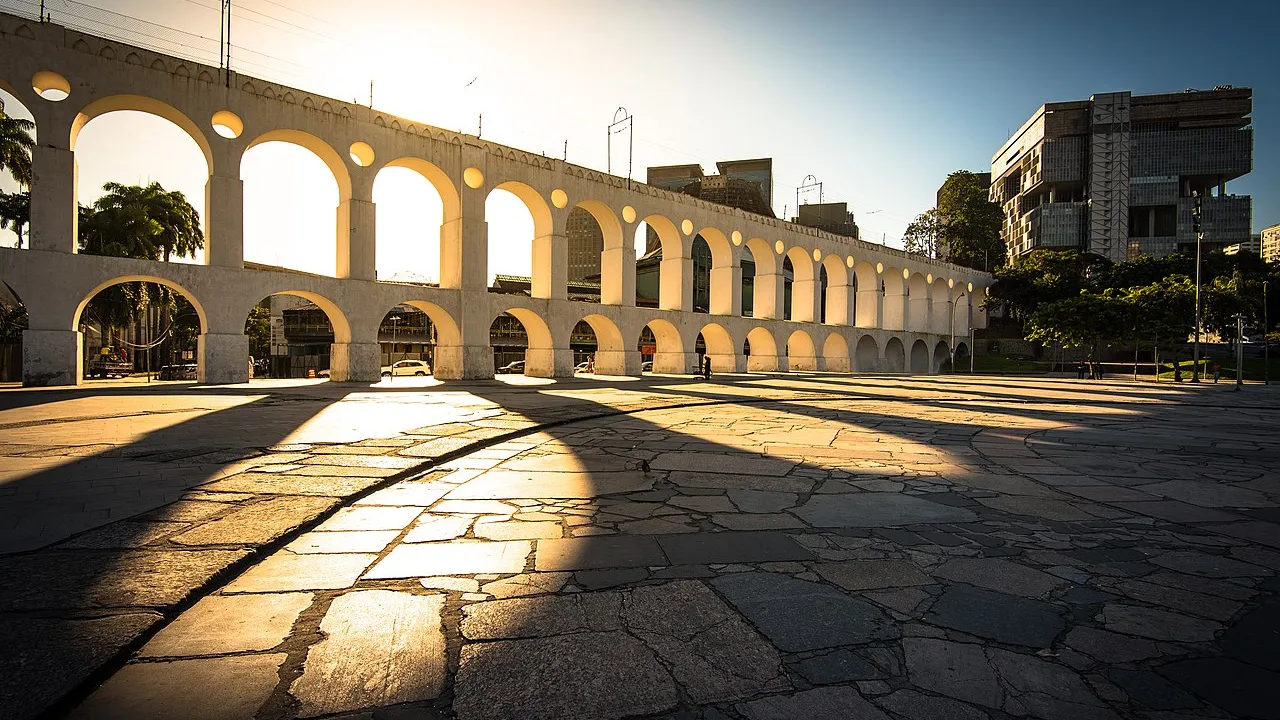
When most people picture Rio de Janeiro, they see sugar‑sand beaches and Carnival parades. Yet the soul of this city doesn’t live on hotel‑lined shores; it thrives in leafy hillsides, art‑filled alleys, noisy markets and kitchens simmering with black‑bean stew. If you’re the sort of traveler who prefers local rhythm to tourist crowds, allow us to guide you through the real Rio the one we call home.
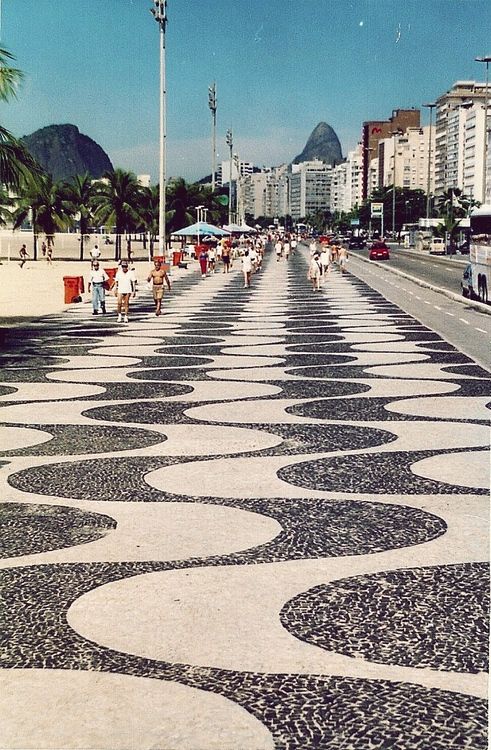
Rio is a metropolis wrapped in a forest. Tijuca National Park, often cited as the world’s largest urban rainforest, spans nearly 40 square kilometers and was painstakingly replanted in the 19th century after coffee cultivation devastated the land. Today its lush canopy moderates city temperatures and shelters hundreds of plant and bird species. Trails wind past waterfalls like Cascatinha and lookout points such as Vista Chinesa, while the hum of traffic fades into birdsong. Visiting Tijuca isn’t just a hike; it’s a reminder that Rio’s wild heart beats a few minutes from downtown.
Foto by: https://i.pinimg.com
Climb into the cobbled, mural‑covered streets of Santa Teresa and you’ll see why locals call it Rio’s Montmartre. Nineteenth‑century mansions perch on the hillside, narrow lanes curve past artist studios, cafés and little bars, and the iconic yellow Bondinho tram clatters by. At the neighborhood’s edge, the tiled Escadaria Selarón steps – the life’s work of artist Jorge Selarón – cascade down to Lapa, connecting two worlds.
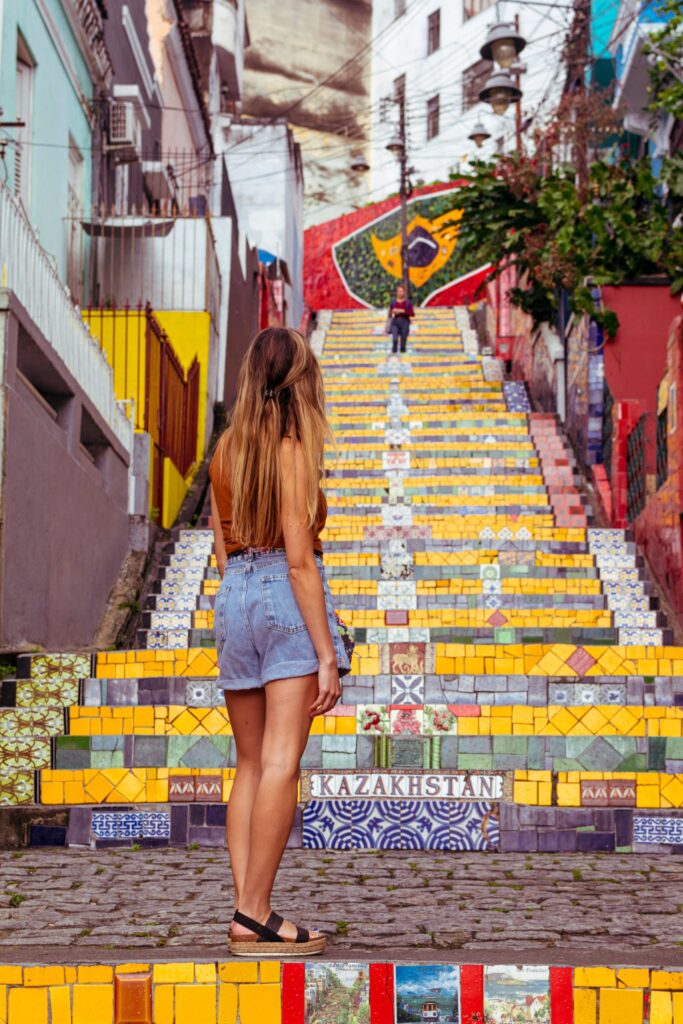
Foto by: Kvierra Coaching

In nearby Centro, step inside the Royal Portuguese Cabinet of Reading. The Neo‑Manueline library, inspired by the Jerónimos Monastery and Belém Tower, opened in 1900. Its stained‑glass skylight floods four stories of carved jacaranda‑wood shelves, which house the largest collection of Portuguese literature outside Portugal. TIME magazine named it one of the world’s most beautiful libraries, and it’s easy to see why when you look up.
Foto by: Viajando pela história do Rio de Janeiro
Lapa’s bohemian spirit hums beneath 18th‑century arches. Built as an aqueduct in the 1750s, the Arcos da Lapa frames a neighborhood of historic bars and old cinemas. Within walking distance lies Passeio Público, Brazil’s first public park. At night, sidewalk bars fill with a mix of locals and travelers drawn to samba clubs that champion Brazilian music.
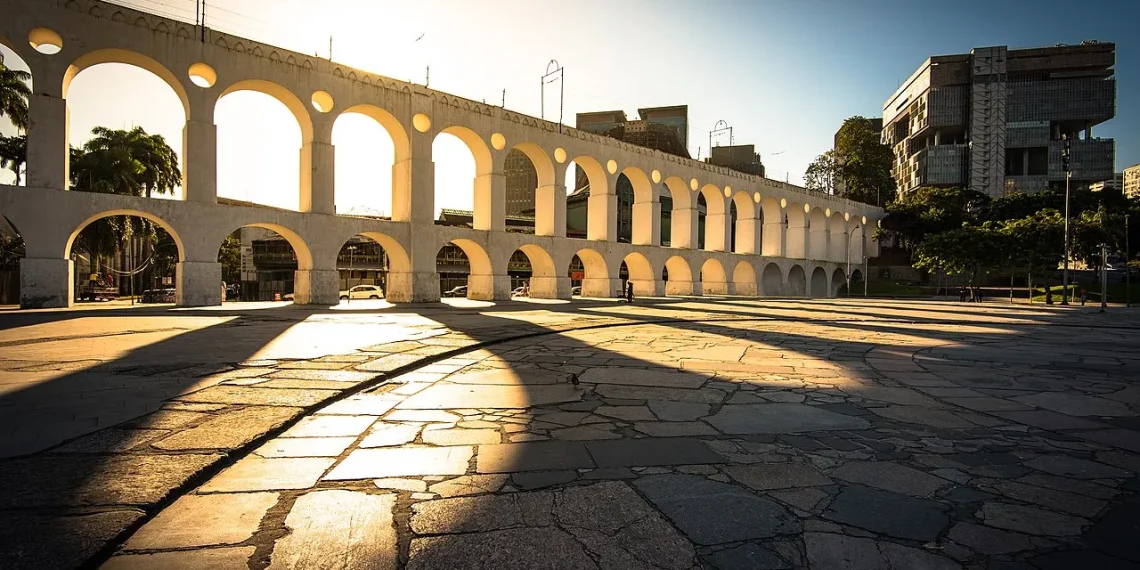
Foto by: Donatas Dabravolskas/Creative Commons
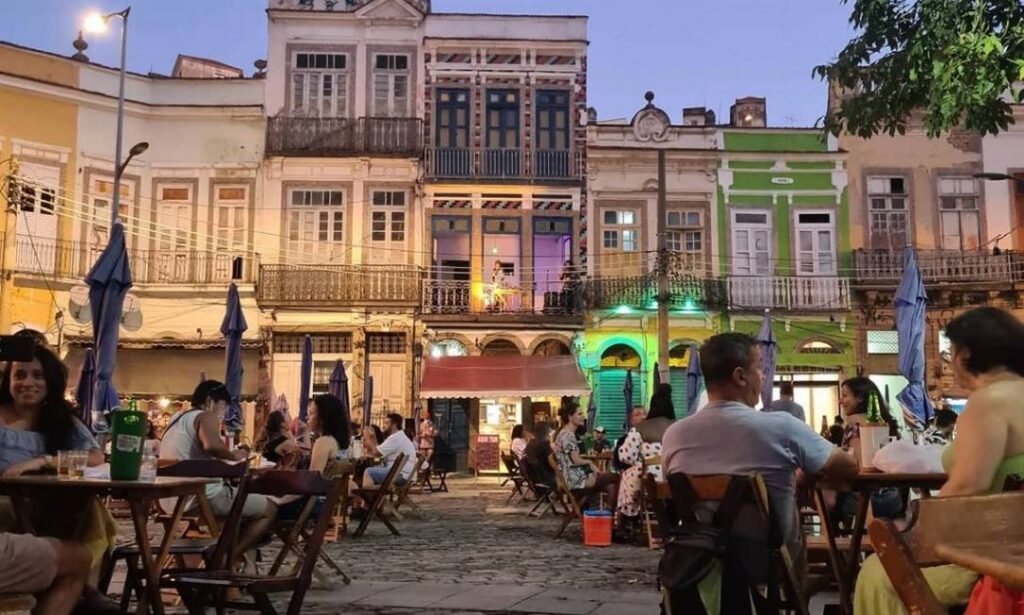
Keep wandering and you’ll find Largo de São Francisco da Prainha, a square lined with preserved colonial buildings and home‑style restaurants. A short walk away, Beco do Rato hides one of the city’s oldest samba bars; its tiny alley hosts live music, film screenings and poetry readings. On Monday evenings, head to Pedra do Sal, the cradle of Afro‑Brazilian culture and street samba. Colorful murals tell the story of slavery, freedom and music, while vendors ladle drinks and snacks. Standing among locals dancing to drums and voices, you’ll feel history ripple through the present.
Foto by: Jornal O Globo
Markets, Meals and the Taste of Belonging
Eating like a Carioca is not about white tablecloths. It’s about joining the rhythm of the city.
At Feira de São Cristóvão, a lively market dedicated to Brazil’s Northeast, the experience becomes richer when explored with local context. Beyond the food stalls, woven hammocks, hand-painted ceramics, regional ingredients, and the sound of forró, there are stories of migration, memory, and cultural identity that are easy to miss without someone who understands the place. With the right guidance, it becomes more than a market visit. It becomes a window into another side of Brazil, right in the middle of Rio.
In the historic downtown area, the Saara district brings together busy streets, colorful storefronts, and shops selling everything from Carnival costumes to spices. At first glance, it can feel chaotic and overwhelming. But with a local guide, the experience gains rhythm, safety, and meaning. You begin to understand what to notice, where to slow down, and how this commercial maze reflects Rio’s everyday life, cultural mix, and popular creativity.
For a simple everyday experience, try a kilo restaurant, a pay-by-weight buffet where you build your own plate from a wide mix of Brazilian dishes. For something deeper, sit down for feijoada. This slow-cooked black bean stew, usually served with rice, greens, farofa, and orange slices, is one of Brazil’s most beloved dishes.
In Rio, feijoada is more than food. It’s a Saturday ritual, a reason to gather, talk, slow down, and stay a little longer at the table.
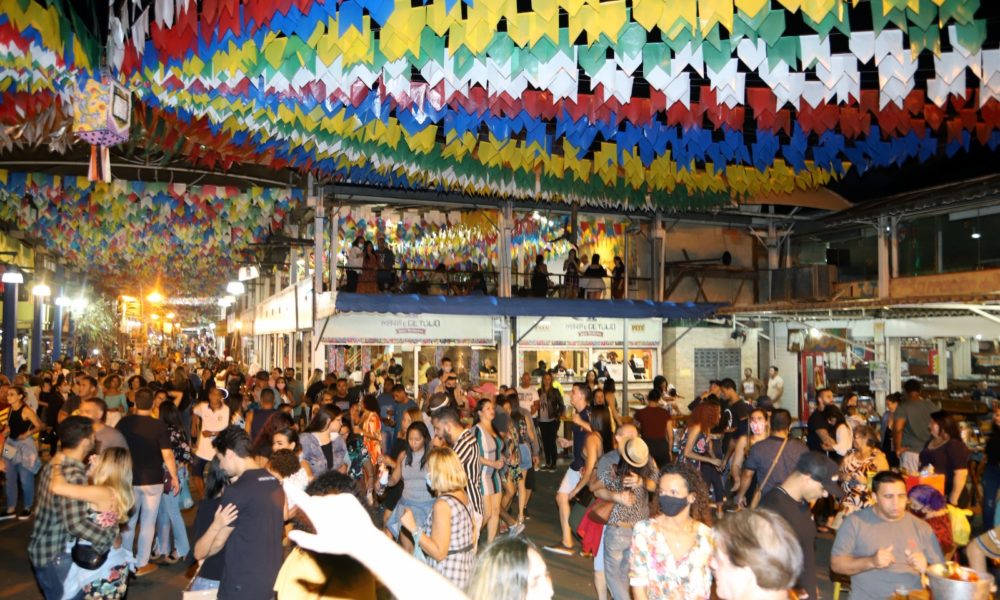
Foto by: Tupy FM
At Itaway we believe travel should expand your circle rather than confine you to a checklist. Our city’s magic lies in the interplay between rainforest and favela, samba circle and library, street food and fine dining. When you venture beyond Copacabana you’ll hear more languages, learn more stories, and contribute to communities committed to preserving their culture.
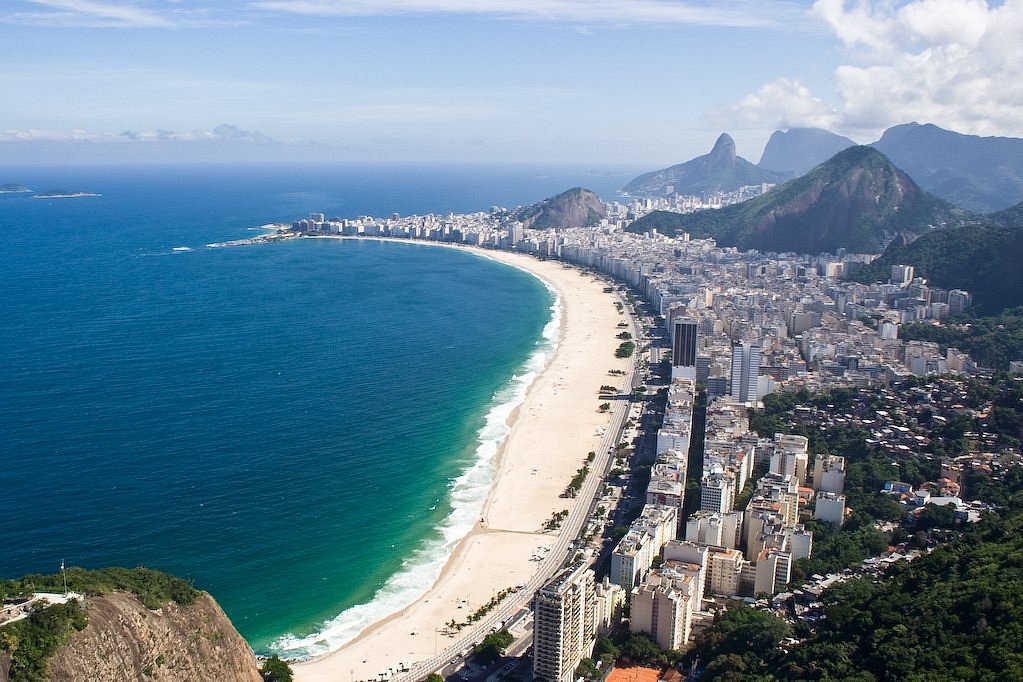
Foto by: Internet
Experience the real Rio; join our guided tours and discover hidden gems with local experts. We design our experiences with sustainability and authenticity at heart, whether you’re hiking through reforested jungle, dancing samba under the stars or sharing a bowl of feijoada with new friends. Let us show you the city we love in a way that respects its people and protects its beauty.
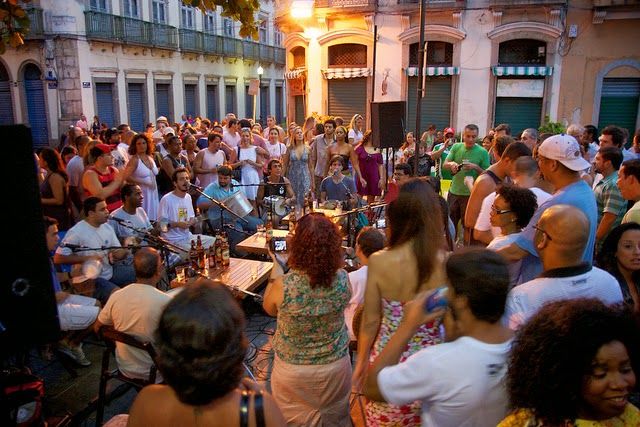
Foto by: Viagens Vamos Nessa
Come curious. Leave changed.